Learning to build by learning to listen
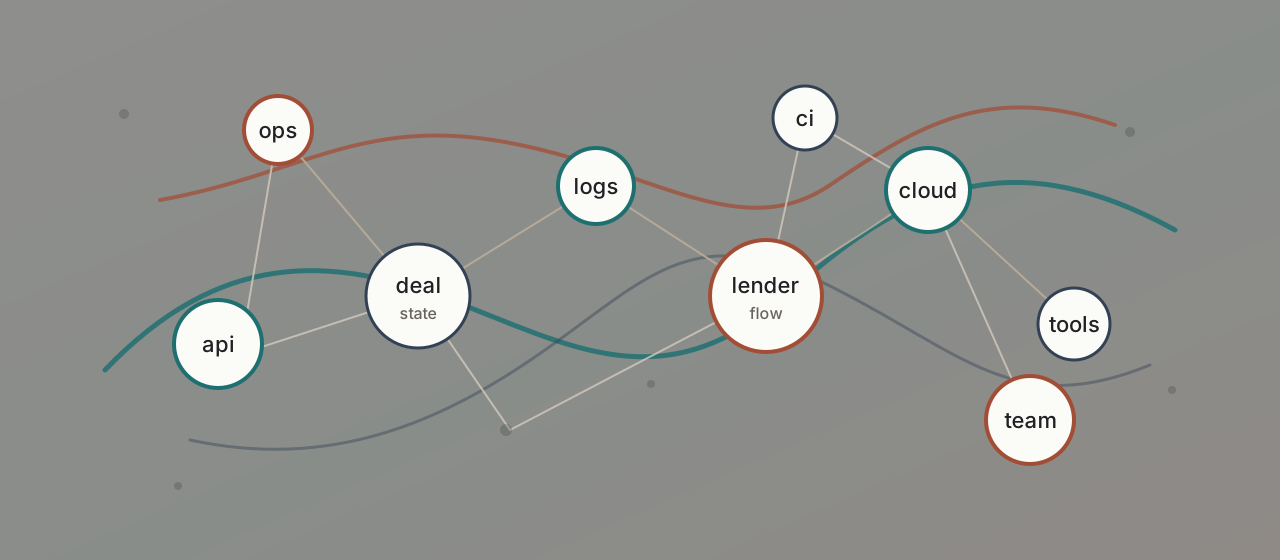
Software rarely fails in the dramatic place. It usually frays in the handoff between services, the field that meant three different things, the retry that worked until it repeated the wrong side effect, or the dashboard that told the truth five minutes too late. I like working close to those edges because they force the system to be honest.
Over time I have become less interested in cleverness as an end in itself and more interested in calm systems: APIs that say what they mean, workflows that make failure visible, tools that remove guesswork, and code that leaves room for the next engineer to understand it without performing archaeology.
Good engineering lowers the cost of making the next correct decision.
Be precise.
Precision is not about making everything complicated. It is about naming the shape of a problem clearly enough that the work has somewhere to land. In financing systems, platform automation, and infrastructure services, a small ambiguity can become a customer issue, a support escalation, or a long afternoon in logs. I try to make the important states explicit.
Be steady.
Reliability is built in ordinary increments: validation, rollback paths, readable alerts, useful dashboards, and code review that asks what happens on the bad day. The best version of a backend service is one that keeps its promises even when the surrounding world is messy.
Be useful.
Internal tools matter because they turn engineering work into shared leverage. When support, operations, product, and engineering can see the same workflow clearly, teams spend less time translating confusion and more time fixing the actual problem.